Retaining a client costs five times less than acquiring a new one. That stat gets quoted a lot, but here is the one that matters more for your shop: clients who return for a second visit are significantly more likely to become long-term regulars. The second visit is the tipping point for barbershop client retention, and most shops do not have a system designed to create it. If you find yourself chasing new clients instead of keeping the ones you have, the fix is rarely more marketing. It is a better retention system.
This guide covers the retention stack that high-performing shops use: what SQUIRE handles natively, where external tools fill the gaps, and the one habit that outperforms every tactic on this list.
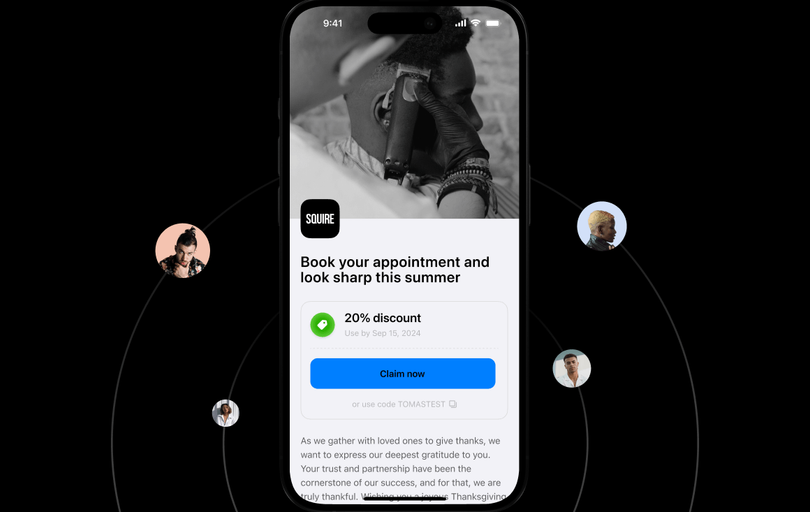
See how SQUIRE supports client retention from booking through loyalty
Why Most Barbershops Lose Clients Between Visits
The most common client retention problem in a barbershop is not the cut. It is the gap.
A client comes in, gets a great fade, and leaves happy. Then three weeks pass. They do not get a reminder. They do not get a "time to rebook" message. They walk past a shop closer to work or see a barber on Instagram. They are not gone because they were unhappy. They are gone because nothing pulled them back.
That is a system problem, not a relationship problem. And system problems get fixed with systems.
The shops that retain clients consistently do three things: they automate the touchpoints between visits, they personalize the experience when clients return, and they give clients a concrete reason to stay. Each layer builds on the one before it.
Layer 1: Booking and Reminders
Barbershop client retention starts before the client sits in the chair.
Automated appointment reminders reduce no-shows, which is the most direct way to protect revenue. But they do something more important for retention: they keep your shop present in the client's week. A reminder 48 hours out, followed by one 2 hours before the appointment, does more than cut cancellations. It signals that your shop is organized and professional.
SQUIRE's appointment reminders run on autopilot. Confirmations and reminders go out on schedule without anyone on your team tracking them manually. For clients who cancel or no-show, SQUIRE's no-show protection gives you the tools to collect deposits and enforce a cancellation policy without an awkward in-person conversation.
The other retention driver at this layer is the booking experience itself. Clients who can book with their specific barber, view real-time availability, and rebook in seconds are far more likely to stay in the rotation.
Layer 2: Client History and Personalization
The difference between a client feeling like a regular and feeling like a walk-in comes down to one thing: does your shop remember them?
Client history means knowing what they got last time, what they asked to keep, any notes from previous visits, and how long it has been since they came in. That information turns a transaction into a relationship.
SQUIRE's client management feature stores this at the profile level. Barbers can review a client's history before they sit down. Less "so what are we doing today?" and more "you wanted to keep the top longer last time, right?" That kind of recall earns loyalty faster than any rewards program. The program matters too, but personalization is the foundation it sits on.
Layer 3: Loyalty Programs and Follow-Up Communication
Once booking and client history are in place, loyalty programs and follow-up messaging are what keep long-term clients engaged between visits.
Loyalty programs work in barbershops, but design matters. Simple programs outperform complicated ones. A points-based structure where clients earn a reward after a set number of visits is easy to explain, easy to understand, and gives clients a specific reason to choose your shop over the one down the street. If a client cannot describe how your program works in one sentence, it is too complicated.
SQUIRE's loyalty program is built into the same booking and payment flow clients already use. Points accumulate automatically. No separate app, no paper cards, no manual tracking on your end.
On the follow-up side, SQUIRE's marketing tools let you reach out to clients who have not been in for a while, send targeted messages to specific segments, and run promos without managing a separate platform.
The Rebooking Moment
Every layer in this system builds toward one moment: the end of the appointment.
This is when the client is satisfied, the cut is fresh, and they are most open to committing to their next visit. Asking for the rebook before they leave the chair is the single highest-return retention habit a shop can build. Most shops do not do it consistently.
The script is not complicated: "When do you want to come back? Four weeks? I can grab you the same slot right now." With online booking active, the next appointment gets locked in before the client walks out the door.
Clients who rebook at the chair have almost no reason to go anywhere else. The reminder system catches the ones who do not. But the rebooking habit is what closes the loop.
SQUIRE's Smart Rebooking inside Engage 2.0 is the automation that catches the clients who do not rebook at the chair, sending a timed nudge when they are due for their next cut.
Frequently Asked Questions
What is client retention in a barbershop? Client retention is the percentage of clients who return to your shop after their first visit. A high retention rate means your shop has a reliable base of regulars. A low retention rate means you are constantly replacing clients who do not come back, which is the most expensive way to run a barbershop.
How do I increase client retention at my barbershop? The most effective approach combines four elements: automated reminders to stay top of mind between visits, client history so every appointment feels personalized, a simple loyalty program that rewards regulars, and a consistent habit of asking clients to rebook before they leave. These four things together function as a system rather than a collection of disconnected tactics.
What loyalty program works best for a barbershop? Simpler programs outperform complicated ones. A points-based model where clients earn a reward after a set number of visits is easy to explain and easy for clients to track. The program should live inside the same platform clients use to book, so earning and redeeming rewards does not require extra steps.
Does SQUIRE have a loyalty program? Yes. SQUIRE's loyalty program feature lets you build a points-based rewards structure directly tied to your booking and payment flow. Clients accumulate points automatically through their existing SQUIRE experience, with no separate app or manual tracking on your end.
How often should a barbershop follow up with clients? A "time to rebook" message around three to four weeks after a visit aligns with most clients' natural haircut cycle. Clients who have not returned in six or more weeks are good candidates for a targeted win-back message. Beyond these touchpoints, communication should be intentional rather than frequent. Over-messaging trains clients to ignore you.
What is the biggest driver of barbershop client loyalty? The second visit. Clients who return a second time are significantly more likely to become long-term regulars. Every retention effort should prioritize closing the gap between visit one and visit two. Automated follow-up and a direct ask to rebook at the end of the first appointment are the most reliable ways to make that happen.
Build the System Once, Then Let It Run
Barbershop client retention is not a personality trait or a natural gift. It is a system. The shops that keep their chairs full are not always the ones with the best cuts. They are the ones that do not leave the next visit up to chance.
SQUIRE's platform covers the full stack: booking, automated reminders, client history, loyalty, and re-engagement. Set it up once and it runs while you focus on the work.
Ready to try SQUIRE?